We provide our services to financial and banking institutions, merchants, and various companies and institutions whose nature of work involves them, as we provide them with a range of the best services that contribute to facilitating purchase transactions through electronic means of various types, including cards and electronic wallets, in addition to payment via mobile phone, through coordination with all parties to process these transactions, including linking to the national switchboard.
Our company's banking
Foreign exchange at competitive rates We seek to become the preferred exchange company for customers by providing the best foreign exchange rates in the market and providing excellent service to our customers with technological development and automation of financial services and reliance on modern electronic indicators to determine exchange rates instantly which accurately reflects market variables in our systems
laundering
Money laundering is the illegal process of concealing the source of funds generated by illegal activities (such as drug trafficking, corruption, or economic crimes) and converting them into funds that appear legitimate. This process takes place in three main stages:
Deposit
At this stage, the illegal money is introduced into the financial system. This stage includes transferring cash into bank deposits or purchasing assets such as real estate and cars.
Camouflage
The goal of this stage is to make it difficult to trace the source of the funds. This is done by transferring funds between multiple accounts, conducting fictitious business transactions,
Merge
The money is returned to the formal economy to appear legitimate. The money is used for investment projects or the purchase of legal assets.
Reasons for the danger of money laundering
Economically: It weakens the national economy by reducing the effectiveness of economic policies and increasing inflation.
Socially: It finances organized crimes, such as terrorism and human trafficking.
Politically: It threatens the stability of countries by manipulating markets and institutions.
Anti-Money Laundering
Legislation and laws
Create laws that criminalize money laundering and impose strict penalties.
Financial institutions
Implementing procedures such as Know Your Customer (KYC) and monitoring suspicious transfers.
International cooperation
Exchange of information between countries to pursue those involved
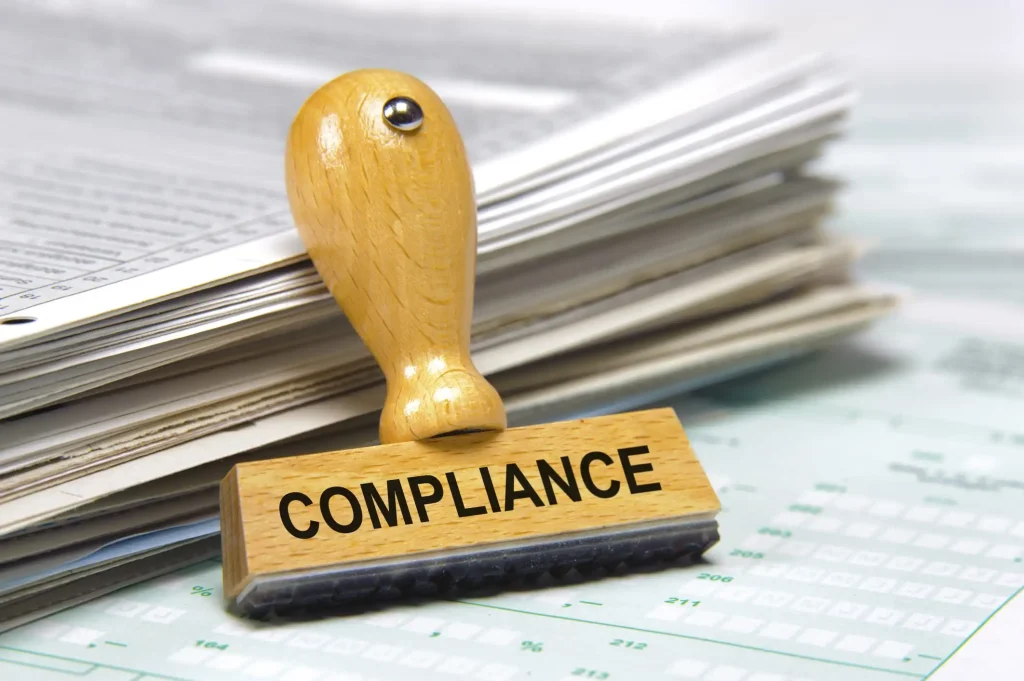
Compliance is the adherence to laws, regulations, standards, and policies in place in an organization or industry. Compliance aims to ensure that activities and business are conducted in a legal, ethical, and regulatory-compliant manner.
Legal Compliance
Compliance with national or international laws and regulations, such as taxes and labor laws.
Regulatory Compliance
Comply with rules imposed by industry regulatory bodies, such as banks or insurance companies.
Internal Compliance
Adherence to the company's internal policies and procedures
Compliance objectives
Protect the company from legal and financial penalties.
Enhance the company’s reputation and build trust with customers and partners.
Support an ethical and responsible business environment.
Reduce risks such as corruption, money laundering, or data breaches
The role of compliance in organizations
Promote transparency
Contributes to building a work environment based on integrity.
Risk management
Helps identify challenges before they turn into big problems.
Achieving Sustainability
Ensures business continuity in a legal and responsible manner.
Financial control is the process of managing and reviewing financial resources to ensure that they are used effectively, legally, and in accordance with established objectives. It aims to promote transparency, reduce waste, and combat corruption by ensuring compliance with financial policies and laws.
Ensure economic efficiency
Ensure maximum utilization of available resources
Promote transparency
Detect any suspicious or illegal financial activities.
Ensure compliance
Ensuring that institutions comply with financial laws and legislation.
The importance of financial control
Combating corruption: Detecting and stopping illegal financial activities.
Enhancing trust: Building confidence between institutions and stakeholders (such as investors and citizens).
Improving financial performance: Reducing costs and improving the efficiency of money management.
Financial control mechanisms
Financial reports
Preparing periodic reports on expenses and revenues
Internal Audit
Internally review financial transactions to ensure accuracy and compliance.
External Audit
Identify and analyze financial risks and develop strategies to deal with them.